
Chimney Repairs in Ireland: Flashing, Pointing and Capping
Free, no-obligation quotes for chimney repairs. Lead flashing, repointing, flaunching, chimney pots, caps and cowls, and redundant chimney stack removal.
- Free quotes
- No obligation
- Written quote before any work
- Homes in all 26 counties
What Chimney Repairs Cover
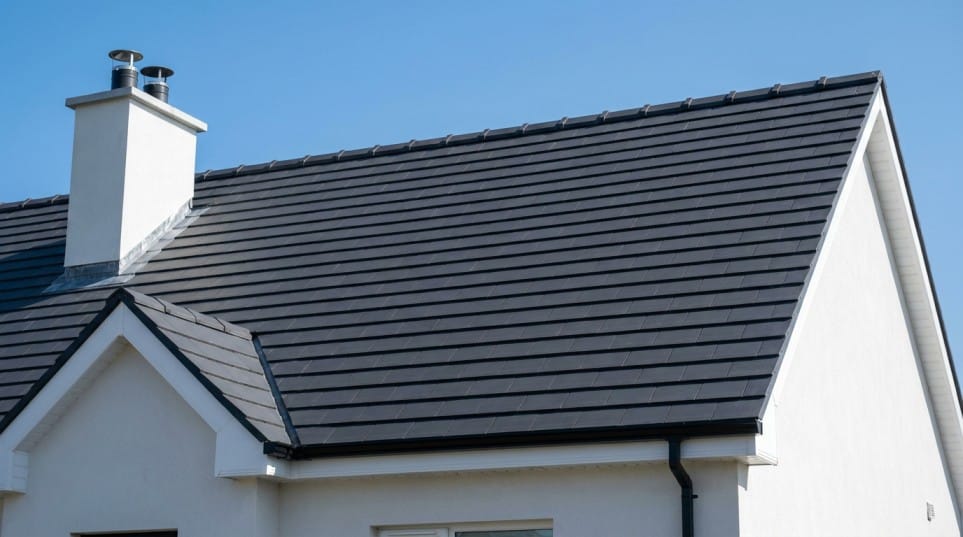
Chimney stacks are one of the most exposed parts of an Irish roof, and the joint between stack and roof is a common source of leaks. Roofers repair the flashing, brickwork and mortar, and cap or remove chimneys that are no longer used.
Lead flashing
Lead flashings seal the joint between the stack and the roof. Cracked or lifted lead is dressed back or replaced.
Repointing
Eroded mortar joints in the stack are raked out and repointed to stop water getting into the brick or blockwork.
Flaunching
The mortar bed around the chimney pots on top of the stack is renewed when it cracks or breaks away.
Pots, caps and cowls
Loose pots are reset, and caps or cowls keep rain, birds and debris out of flues.
Rendering
Cracked or blown render on the stack is repaired or replaced to keep the stack weathertight.
Stack removal
Redundant chimney stacks can be taken down below roof level and the roof made good.
Signs Your Chimney Needs Repair
01
Damp chimney breast
Damp patches on the chimney breast or ceiling next to the chimney.
02
Loose pots
Chimney pots that lean, rock or have mortar missing around their base.
03
Cracked render
Cracked, stained or missing render or mortar on the stack.
04
Lifted flashing
Lead flashing that has lifted, split or pulled away from the stack.
Materials Used on Chimneys
Lead
The traditional flashing material for chimneys, dressed to fit the stack and roof covering.
Lime and cement mortars
Older stacks are often built in lime mortar, which needs a compatible mortar when repointed.
Caps and cowls
Clay, metal and mesh caps keep rain and birds out of flues that are open or no longer in use.
Rules and Standards to Know
01
Planning
Chimney repairs are usually exempted development. Check with your local council before removing a stack on a protected structure or in an Architectural Conservation Area.
02
Asbestos
The Health and Safety Authority requires asbestos to be identified before maintenance or renovation starts on buildings from before 2005. Many older Irish roofs used asbestos cement slates.
03
Safety
Under the Construction Regulations 2013, homeowners who hire a roofer are clients. For a single-contractor job, the main duty is to check the roofer is competent and has a plan for working at height.
04
Bats
All Irish bat species are protected. If bats roost in your roof space, works that disturb them need a derogation licence from the National Parks and Wildlife Service.
Grants That Can Help
There is no general grant for roofing work in Ireland, but these schemes can cover it in the right circumstances.
Housing Aid for Older People Grant
Up to €10,700 for essential repairs for homeowners aged 66 and over, administered by your local council. Roof repairs are usually covered. Approval is needed before work starts.
Vacant Property Refurbishment Grant
Up to €50,000 to bring a vacant home back into use, or up to €70,000 if the property is derelict. Roof, chimney and gutter works are covered. Apply to your local council before work starts.
Built Heritage Investment Scheme
Owners of protected structures can apply through their local council for funding towards conservation repairs, including roofs, under the Department of Housing, Local Government and Heritage schemes.
How RoofQuotes.ie Works
Step 1
Tell us about your roof
Fill in the short form with your job, roof type and Eircode. Add a photo if you have one.
Step 2
Roof survey
A roofer who covers your area contacts you to arrange a survey.
Step 3
Written quote
Get a clear written quote covering materials, scaffolding, waste removal and guarantee.
Step 4
Work gets done
You decide whether to go ahead. There is no obligation.
Chimney Repairs: Questions, Answered
Why does my chimney leak?
The most common causes are failed lead flashing where the stack meets the roof, eroded mortar joints, cracked flaunching around the pots and open flues letting rain straight in. A roofer checks each in turn.
Can I remove a chimney I no longer use?
Yes, redundant stacks can be taken down and the roof made good. On a protected structure or in an Architectural Conservation Area, check with your local council first, as removal can affect the character of the building.
Should an unused chimney be capped?
Capping keeps rain and birds out of an unused flue. A ventilated cap lets air move through the flue, which helps prevent damp inside the chimney breast.
Is there a grant for chimney repairs?
There is no specific chimney grant. Chimney works can be covered by the Housing Aid for Older People Grant or the Vacant Property Refurbishment Grant, and protected structures may qualify for conservation funding through the local council.
Related Roofing Services
Get a Free Chimney Repair Quote
Tell us about your roof in under a minute. Free and no obligation.
- Free quotes
- No obligation
- Written quote before any work
- Homes in all 26 counties