
Re-Roofing in Ireland: Full Roof Replacement for Irish Homes
Free, no-obligation quotes for re-roofing and full roof replacement. Strip and replace with new breathable membrane, battens, slates or tiles, ridges, valleys and flashings.
- Free quotes
- No obligation
- Written quote before any work
- Homes in all 26 counties
What Re-Roofing Covers
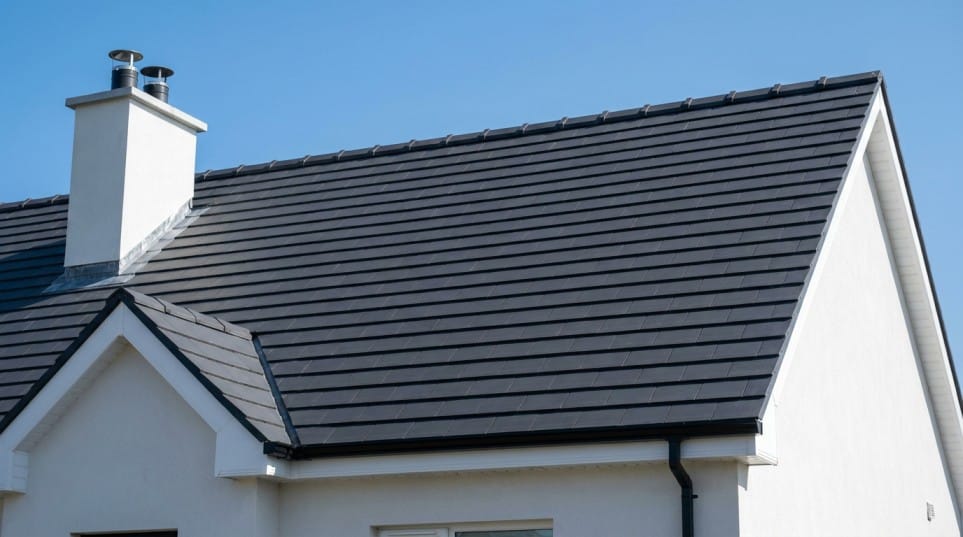
Re-roofing replaces the roof covering down to the rafters. Roofers in Ireland strip the old slates or tiles, check the roof timbers, fit a new breathable membrane and battens, and lay new slates or tiles with new ridges, valleys and flashings.
Strip and inspect
The old covering, battens and felt come off, and the rafters are checked for rot, woodworm or sagging before anything new goes on.
Breathable membrane
A modern breathable membrane replaces old bitumen felt, letting moisture escape from the roof space while keeping wind-driven rain out.
New battens
Treated battens are fixed at the gauge set by the slate or tile manufacturer and the NSAI slating code.
Slates or tiles
New natural slate, fibre cement slate or concrete tiles are laid and fixed for the wind exposure of the site.
Ridges, hips and valleys
New ridge and hip tiles, often on a dry fix system, and new lead or GRP valleys complete the roof.
Insulation and ventilation
With the roof open, insulation and roof space ventilation can be upgraded to current Building Regulations.
Signs You Need a New Roof
01
Repeated repairs
Leaks keep returning in different places, even after repairs.
02
Failed underlay
Old bitumen felt in the attic is torn, brittle or sagging between rafters.
03
Delaminating slates
Slates are flaking, crumbling or slipping across large areas of the roof.
04
Asbestos slates
The roof has old fibre cement slates that may contain asbestos and need replacing.
Materials and Options
Natural slate
Long-lasting and traditional. Spanish slate is the most common import, and natural slate is often required on protected structures.
Fibre cement slate
Lightweight and uniform. Cedral by Etex Ireland manufactures fibre cement slates in Athy, Co. Kildare.
Concrete tiles
Interlocking concrete tiles are widely used on Irish estate housing and are quick to lay.
Rules and Standards to Know
01
Part L
Building Regulations Part L apply when a roof is renovated. Replacing a roof is the most practical time to bring insulation up to current standards.
02
Planning
Like-for-like roof work usually does not need planning permission. Homes on your local council’s Record of Protected Structures are different, and works that change the roof’s character can need permission.
03
Bats
All Irish bat species are protected. If bats roost in your roof space, works that disturb them need a derogation licence from the National Parks and Wildlife Service.
04
Asbestos
The Health and Safety Authority requires asbestos to be identified before maintenance or renovation starts on buildings from before 2005. Many older Irish roofs used asbestos cement slates.
05
Safety
Under the Construction Regulations 2013, homeowners who hire a roofer are clients. For a single-contractor job, the main duty is to check the roofer is competent and has a plan for working at height.
06
CIRI
The Construction Industry Register Ireland is being introduced as a statutory register for builders and trades. It is worth asking any roofer whether they are registered.
Grants That Can Help
There is no general grant for roofing work in Ireland, but these schemes can cover it in the right circumstances.
Housing Aid for Older People Grant
Up to €10,700 for essential repairs for homeowners aged 66 and over, administered by your local council. Roof repairs are usually covered. Approval is needed before work starts.
Vacant Property Refurbishment Grant
Up to €50,000 to bring a vacant home back into use, or up to €70,000 if the property is derelict. Roof, chimney and gutter works are covered. Apply to your local council before work starts.
SEAI Attic Insulation Grant
Fixed grants from SEAI for attic insulation on homes built and occupied before 2011: €2,000 detached, €1,500 semi-detached or end of terrace, €1,400 mid-terrace, €1,100 apartment.
How RoofQuotes.ie Works
Step 1
Tell us about your roof
Fill in the short form with your job, roof type and Eircode. Add a photo if you have one.
Step 2
Roof survey
A roofer who covers your area contacts you to arrange a survey.
Step 3
Written quote
Get a clear written quote covering materials, scaffolding, waste removal and guarantee.
Step 4
Work gets done
You decide whether to go ahead. There is no obligation.
Re-Roofing: Questions, Answered
Do I need planning permission to replace my roof?
Like-for-like roof replacement usually does not need planning permission. Protected structures and changes to the roof shape, height or front-facing rooflights can. Your local council can confirm for your home.
Does a new roof need insulation?
When a roof is fully replaced, Building Regulations Part L apply. Adding insulation while the roof is open is usually the most practical time to do it, and the SEAI attic insulation grant can help on homes built before 2011.
What happens if there are bats in my roof?
Bats and their roosts are protected. Works that would disturb them need a derogation licence from the National Parks and Wildlife Service, and timing the work outside key bat seasons often helps.
Do I need a project supervisor for a re-roof?
For a single-contractor job, you need to take reasonable steps to check the roofer is competent. Larger jobs with more than one contractor need a Project Supervisor Design Process and a Project Supervisor Construction Stage appointed in writing.
What should a re-roofing quote include?
The roof covering and membrane spec, batten size, ridge, hip and valley details, flashings, any timber repairs, scaffolding, waste removal, a start date and the guarantee on workmanship and materials.
Related Roofing Services
Get a Free Re-Roofing Quote
Tell us about your roof in under a minute. Free and no obligation.
- Free quotes
- No obligation
- Written quote before any work
- Homes in all 26 counties